
Donald Trump embarrassed President Ramaphosa at the White House, igniting global debate on South Africa’s racial tensions and leadership dynamics.
Trump vs Ramaphosa: A Diplomatic Shock That Exposed South Africa’s Racial Fault Lines
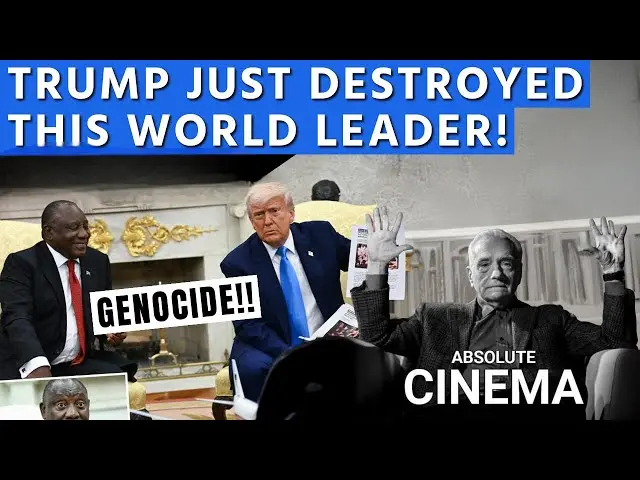
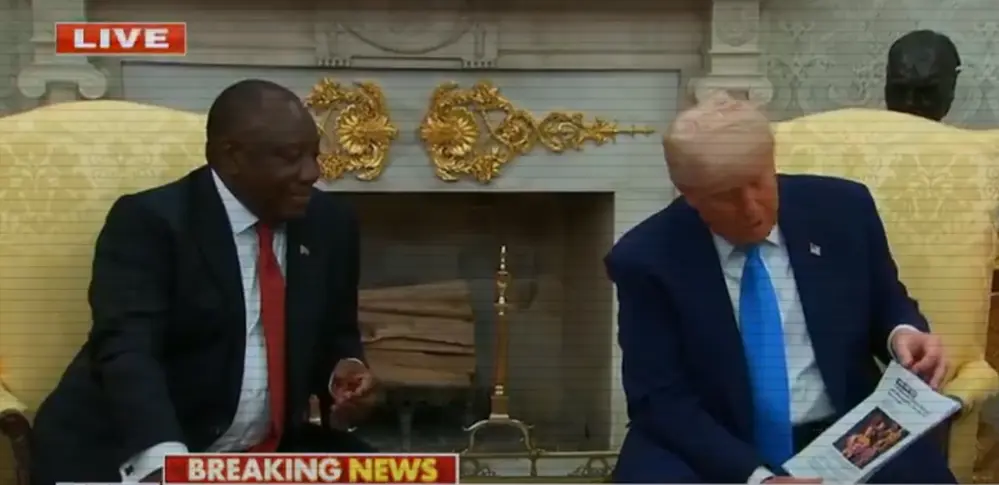
In a tense and widely publicized diplomatic encounter, former U.S. President Donald Trump hosted South African President Cyril Ramaphosa at the White House—only to embarrass him publicly over the controversial and sensitive topic of violence against white South Africans.
The meeting, originally framed as a diplomatic opportunity to strengthen U.S.–South Africa relations, quickly turned confrontational. Trump took the stage to question South Africa’s land reform policies and raised alarms over what he claimed to be widespread violence against the country’s white population. His remarks were bold, direct, and broadcast globally, leaving President Ramaphosa visibly unsettled.
A Global Media Frenzy
Major international outlets like BBC, CNN, and Al Jazeera swiftly picked up the story. While some praised Trump for addressing what he calls an “ignored crisis,” others accused him of undermining a sovereign leader on a global stage.
Back in South Africa, many citizens—including members of the ruling African National Congress (ANC)—expressed humiliation and outrage. Social media buzzed with hashtags like #RamaphosaEmbarrassed and #WhiteViolenceDebate, reflecting the polarized reactions among South Africans.
Geopolitical Ramifications
This incident has once again sparked debates about geopolitical etiquette, racial politics in Africa, and the role of Western powers in African domestic affairs. Trump’s blunt approach drew criticism for lacking diplomacy but also earned praise from conservative voices who believe white minorities in Africa are often overlooked in global human rights discussions.
South Africa has long struggled with narratives around land ownership, post-apartheid reforms, and racial tensions. While the government has denied claims of targeted violence, Trump’s public comments have forced the issue into the international spotlight.
The Numbers Behind the Controversy
According to some civil society reports and farm watch groups, incidents of violence in rural South Africa—especially among white farmers—have increased. However, independent analysts argue that these statistics are often exaggerated for political purposes and do not represent a targeted campaign against white citizens.
President Ramaphosa has previously addressed this issue by reaffirming that South Africa’s reforms are legal, non-racial, and aimed at correcting historical inequalities. Nevertheless, Trump’s criticism has reignited fears among South African whites and emboldened critics of the ANC-led government.
A Divisive Legacy
This diplomatic moment may go down in history as a defining clash between two vastly different leadership styles. While Trump is known for provocative, media-savvy tactics, Ramaphosa’s more diplomatic demeanor seemed ill-matched against the former U.S. President’s confrontational tone.
For South Africa, the challenge now lies in navigating the global fallout while trying to mend domestic wounds. For the U.S., the incident reflects Trump’s continued influence over global narratives—even outside the Oval Office.
Conclusion
The Trump-Ramaphosa incident at the White House is more than just a diplomatic footnote—it’s a flashpoint in the evolving discourse around race, leadership, and global power dynamics. For some, Donald Trump’s outspoken remarks served as a bold stand against what they perceive as an overlooked humanitarian issue in South Africa. His willingness to challenge President Cyril Ramaphosa publicly has been seen by his supporters as evidence of strong leadership and commitment to justice—regardless of international protocols.
On the other hand, many view the moment as a diplomatic blunder that undermined international relations and embarrassed an entire nation. Ramaphosa, a leader navigating complex internal challenges, was put on the defensive in front of the global press, and many South Africans felt humiliated by the interaction. The incident not only strained South Africa-U.S. relations but also brought back difficult memories of racial injustice in the country’s past.

 By
By
 By
By
 taib29 says:
 123br says: